Need help?
Choose one of the following options:


The Evolution of the Trench Coat: From British Heritage to the Urban Flâneur
Originally designed as a waterproof military garment for the British army, the trench coat has evolved into a timeless staple of both formal and smart-casual wardrobes. Gutteridge reinterprets the original design, incorporating a smooth inner lining that allows the coat to be worn over suit jackets and blazers without creating friction or stiffness around the shoulders.


Distinctive Details: Shoulder Straps, Belt and Refined Technical Fabrics
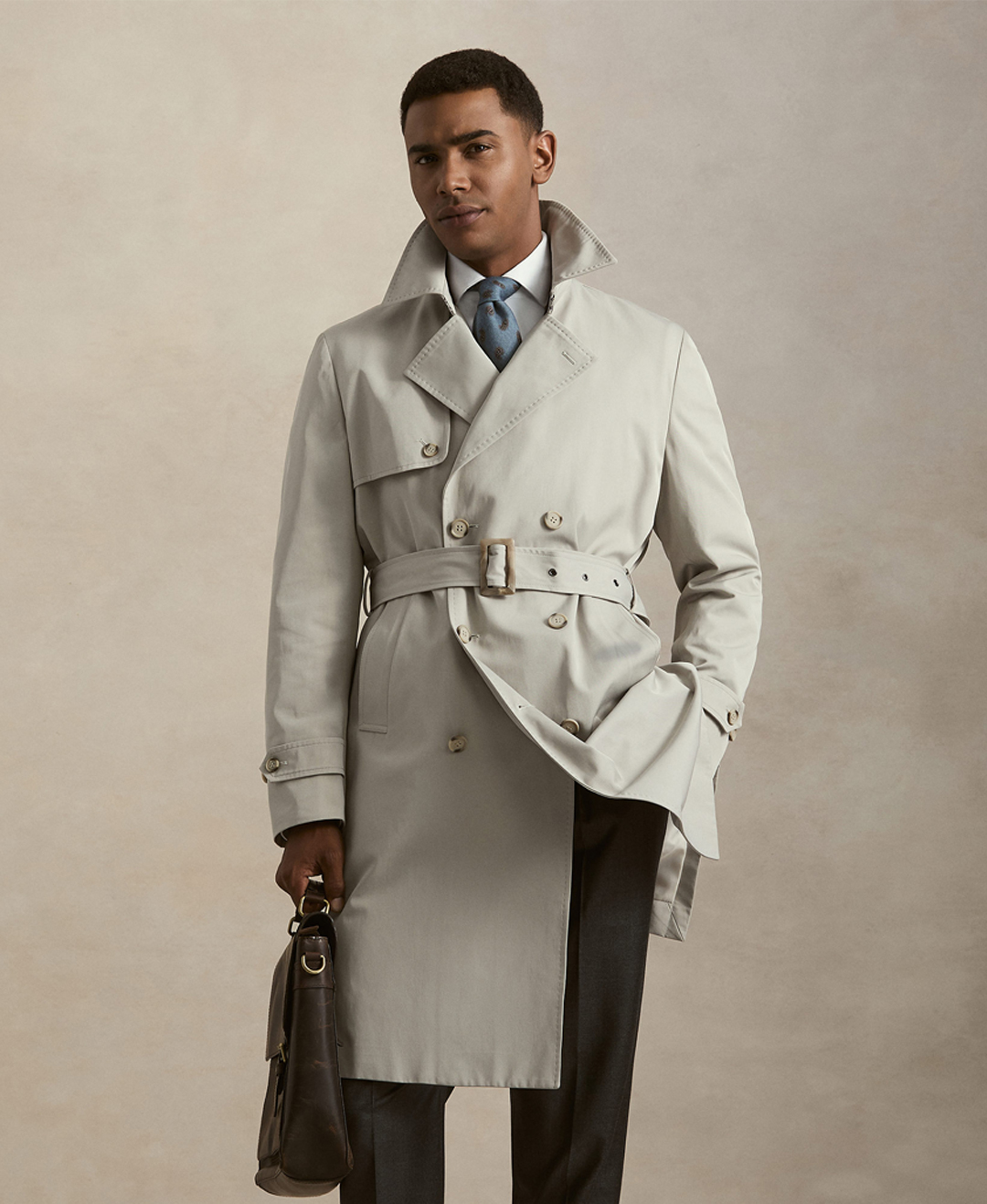
The double-breasted cotton-blend trench coat features carefully considered technical and construction details:
-
Fabric Composition: Cotton twill blend designed to provide wind resistance, protection against moisture and reduced creasing.
-
Closure and Fit: Double-breasted fastening with matching buttons and an adjustable waist belt with buckle.
-
Tailoring Details:
Cuffs with strap and button
Two slanted side welt pockets.
Central back vent for ease of movement. -
Interior: Lined with a smooth fabric to make it easier to wear over knitwear or a jacket.
-
Size Guide: Regular fit.


How to Wear a Trench Coat as the Weather Turns Colder
The trench coat's fit makes it ideal for layering. Its construction is designed to accommodate different layers without distorting the silhouette.


Formal Layering: Wearing a Trench Coat Over a Tailored Suit
The main ways to style the double-breasted cotton-blend trench coat vary according to the occasion:
-
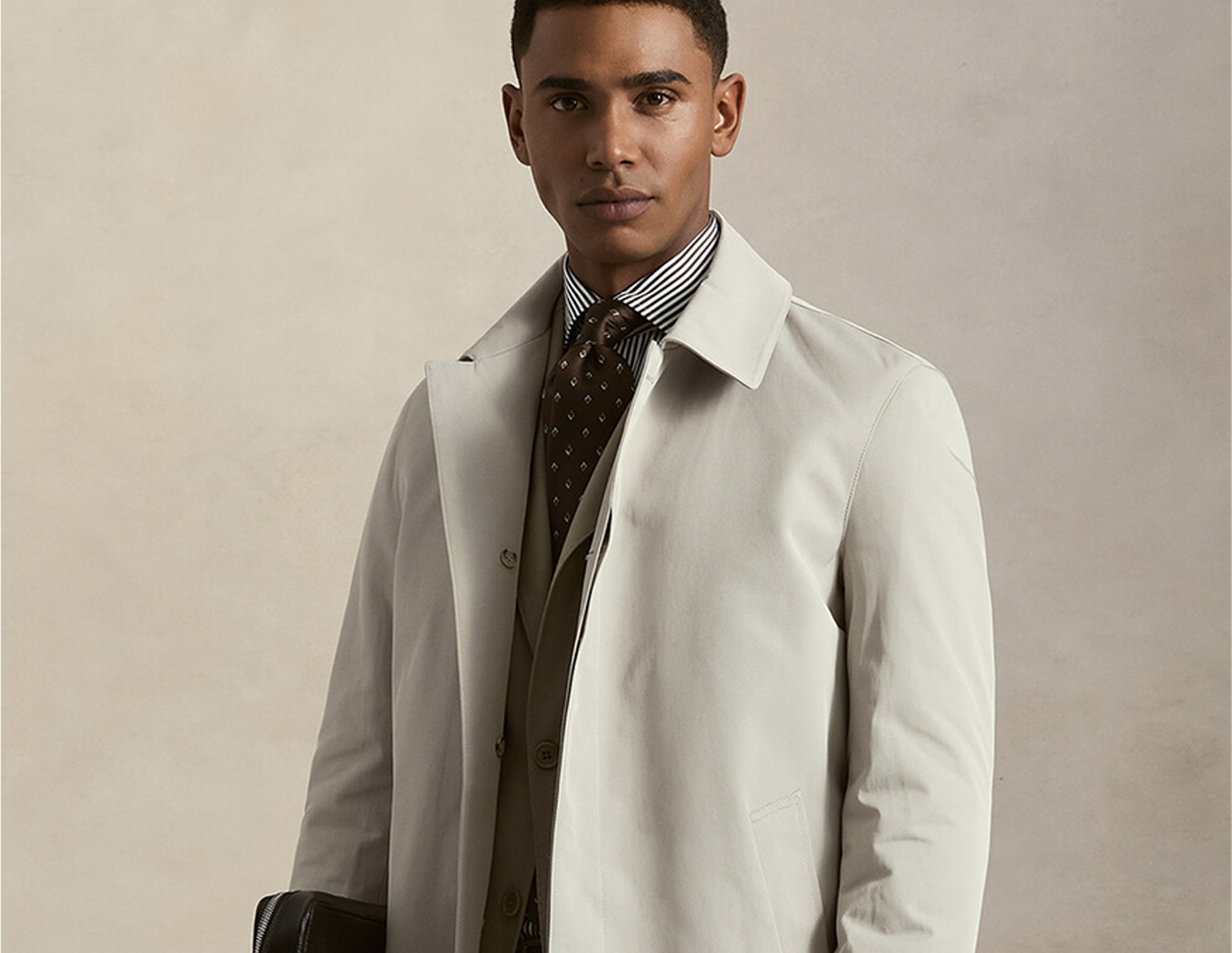
Formal Business: A trench coat worn over a Super 110's fine wool suit, a cotton poplin shirt and a silk tie, finished with leather Derby lace-up shoes.
-
Smart Casual: A trench coat paired with a cable-knit or fine-knit turtleneck or V-neck sweater, cotton chino trousers and suede Chelsea boots.
-
Leisure: A trench coat worn open or tied at the waist over a long-sleeved polo shirt and dark denim.




- Canada
- Albania
- Andorra
- Argentina
- Armenia
- Bahrain
- Belgique
- Bulgaria
- Chile
- Costa Rica
- Croatia
- Cyprus
- Czechia
- Denmark
- Deutschland
- España
- Estonia
- Finland
- France
- Greece
- Guatemala
- Hong Kong SAR China
- Hungary
- Indonesia
- Ireland
- Italia
- Japan
- Jordan
- Kazakhstan
- Kuwait
- Latvia
- Lithuania
- Luxembourg
- Malta
- Maroc
- Mexico
- Monaco
- Netherlands
- Norway
- Österreich
- Poland
- Portugal
- Qatar
- Romania
- San Marino
- Saudi Arabia
- Schweiz
- Slovakia
- Slovenia
- South Korea
- Sweden
- Türkiye
- United Arab Emirates
- United Kingdom
- United States
- Venezuela